

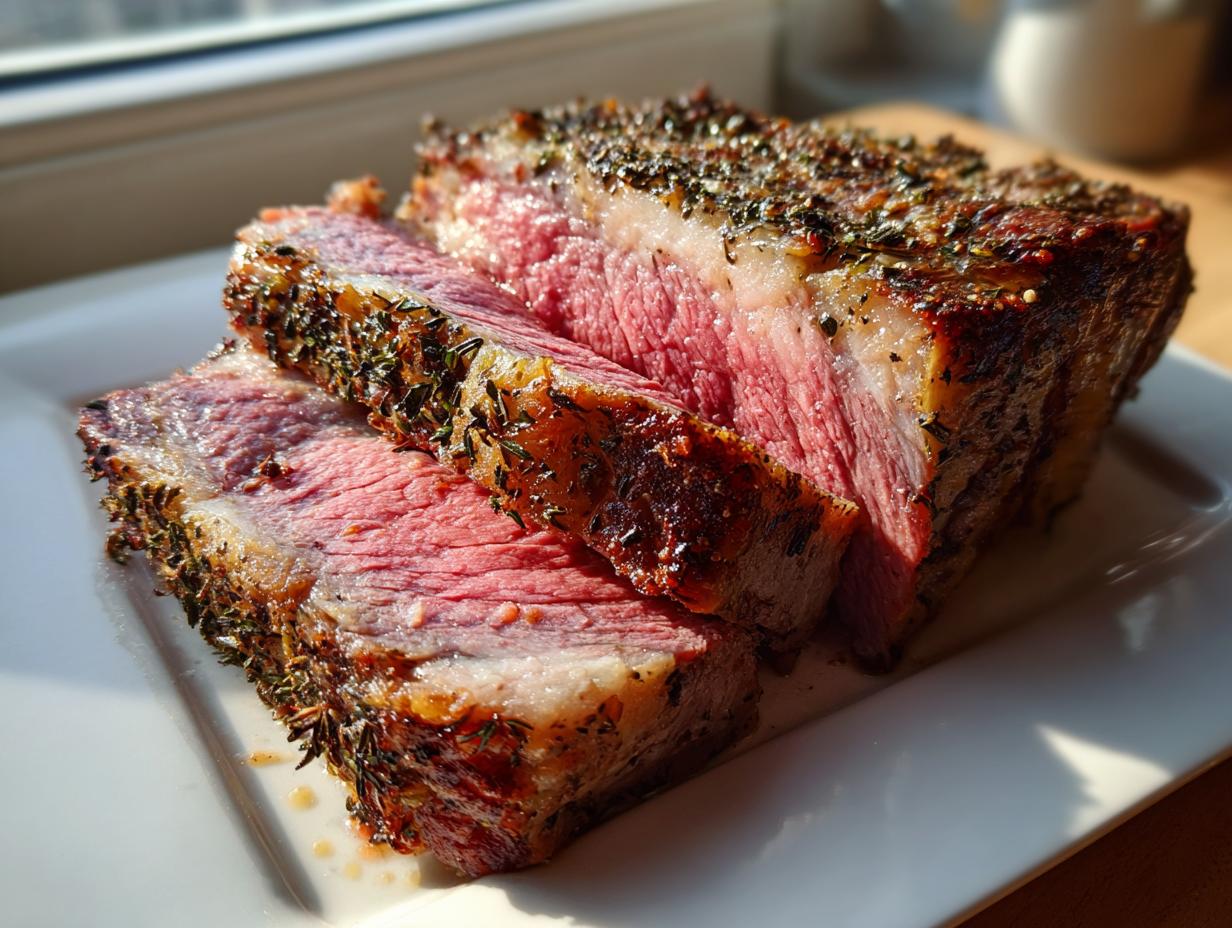
Oh my gosh, I know the feeling. Pulling out that massive prime rib roast for Christmas or Thanksgiving can send a genuine chill down your spine. It’s an expensive cut, and the pressure to get that crust perfect while keeping the inside unbelievably tender feels overwhelming, right? Forget the stress! That’s why I developed this ultimate easy, foolproof prime rib recipe. My philosophy here at Completely Yummy is that you deserve spectacular food without the drama. This oven-roasted method is the secret weapon I use for any big gathering. When reliability is everything, this is the prime rib recipe you’re going to rely on year after year.
- Why This is the Best Prime Rib Recipe for Your Holiday Centerpiece
- Ingredients for Your Herb Crusted Prime Rib Recipe
- Simple Prime Rib Instructions: Achieving the Perfect Prime Rib Temperature
- Ingredient Notes and Substitutions for this Oven Roasted Prime Rib
- Tips for Success with Your Classic Prime Rib Recipe
- Serving Suggestions for Your Prime Rib with Au Jus
- Storage and Reheating Instructions for Leftover Prime Rib Recipe
- Frequently Asked Questions About How to Cook Prime Rib
- Nutritional Estimate for This Prime Rib Recipe
- Share Your Holiday Centerpiece Roast Success
Why This is the Best Prime Rib Recipe for Your Holiday Centerpiece
I want you to stop worrying about drying out that beautiful roast. This isn’t some fiddly, complicated method you need a culinary degree to attempt!
- It’s designed to be an easy prime rib recipe. We use simple, bold herbs you likely already have.
- The two-stage temperature method guarantees that gorgeous, salty crust without overcooking the interior.
- This technique locks in every bit of moisture, ensuring you get that guaranteed melt in your mouth prime rib texture every single time.
- It’s perfect for planning ahead, letting you focus on the gravy and sides instead of babying the roast.
You can find some of my other straightforward meals over at my easy weeknight dinners page, but this roast is the star when quality counts!
Ingredients for Your Herb Crusted Prime Rib Recipe
We keep the ingredient list short because the star here is the meat itself! For this herb crusted prime rib, you really need a good cut to start. I insist on a bone-in roast because those bones keep the meat tender as it cooks. Trust me on this one!
Here’s what you’ll need for our simple seasoning:
- 1 (5-7 pound) bone in prime rib roast
- 3 tablespoons coarse kosher salt
- 2 tablespoons black pepper
- 1 tablespoon garlic powder
- 1 tablespoon onion powder
- 1 tablespoon dried rosemary
- 1 tablespoon dried thyme
- 1 tablespoon dried oregano
- 4 tablespoons olive oil
- 4 cloves garlic, minced
That’s it! The magic comes from the technique, not from needing twenty different spices. You’ll see how these basic herbs absolutely transform this classic prime rib.
Simple Prime Rib Instructions: Achieving the Perfect Prime Rib Temperature
Okay, let’s talk roasting! This is where people get nervous about their expensive meat, but this method—the high-heat blast followed by a long, slow finish—is your secret weapon for the best prime rib recipe. Remember, conquering the perfect prime rib temperature is non-negotiable for a show-stopping holiday centerpiece.
Preparing the Roast and Herb Rub for Your Prime Rib Recipe
First things first: pull that beauty out of the fridge about three hours before you plan on cooking it. I know it feels like you’re tempting fate, but letting the meat warm up slightly is crucial! It helps the roast cook evenly, which is vital for any easy prime rib recipe.
While it’s warming up, blend all those dried herbs and spices together in a small bowl. Then, grab a paper towel and pat the entire surface of the roast until it’s basically screaming dry—a dry surface means a crispy crust! Brush it all over with the garlic oil, and then go wild rubbing that herb mixture on there, pressing it in so it really sticks. Pop it fat-side up onto your rack in the pan to get ready for the oven.
The Two-Temperature Roasting Method for a Juicy Prime Rib Roast
We start hot! Crank that oven to 450°F. Roast it hard for exactly 15 minutes. This initial blast sets that beautiful outer crust we’re aiming for. Don’t peek! After 15 minutes, drop the heat down to 325°F. Remember, do not open the oven door when you change the temperature!
Now, you roast low and slow until your thermometer reads 125°F. That’s for medium-rare, which gives you that divine juicy prime rib roast moment. Seriously, you *must* use a reliable meat thermometer here. It’s the only way to nail that impossible-to-hit target temperature!
Resting and Carving Your Tender Beef Roast Recipe
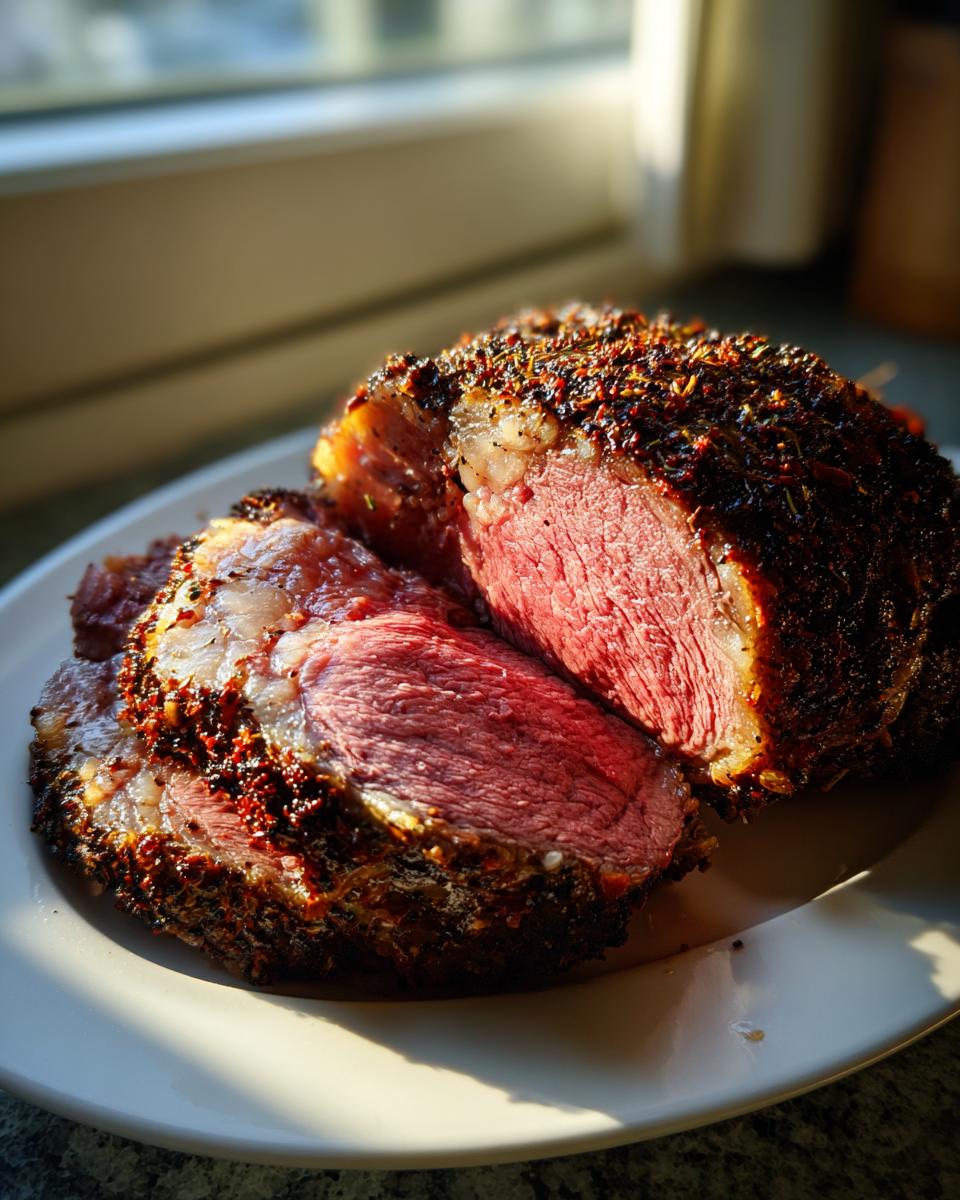
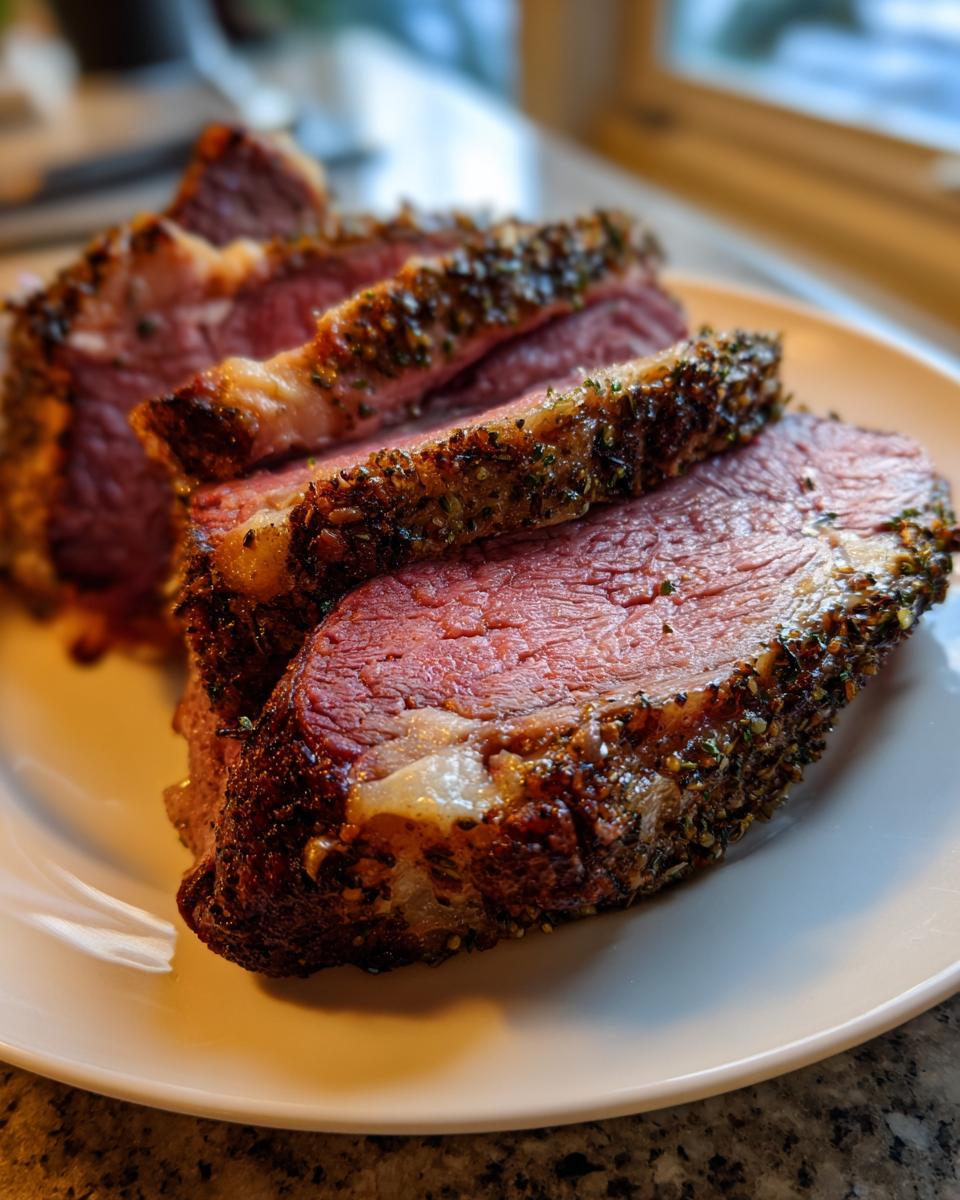
The hardest step? Waiting! When you pull it out at 125°F, tent it loosely with foil. It has to rest for at least 20 to 30 juicy minutes. If you skip this resting period, all that beautiful juice you worked so hard to create runs right out onto your cutting board. That downtime allows the juices to redistribute, and that’s what guarantees that melt in your mouth prime rib you’ve been dreaming of. When you finally slice it, make sure you’re cutting against the grain so every slice has that tender texture. Need some simple ideas for what to serve alongside it? Check out my recipe for easy chili recipe—kidding! But seriously, save room for the sides!
Ingredient Notes and Substitutions for this Oven Roasted Prime Rib
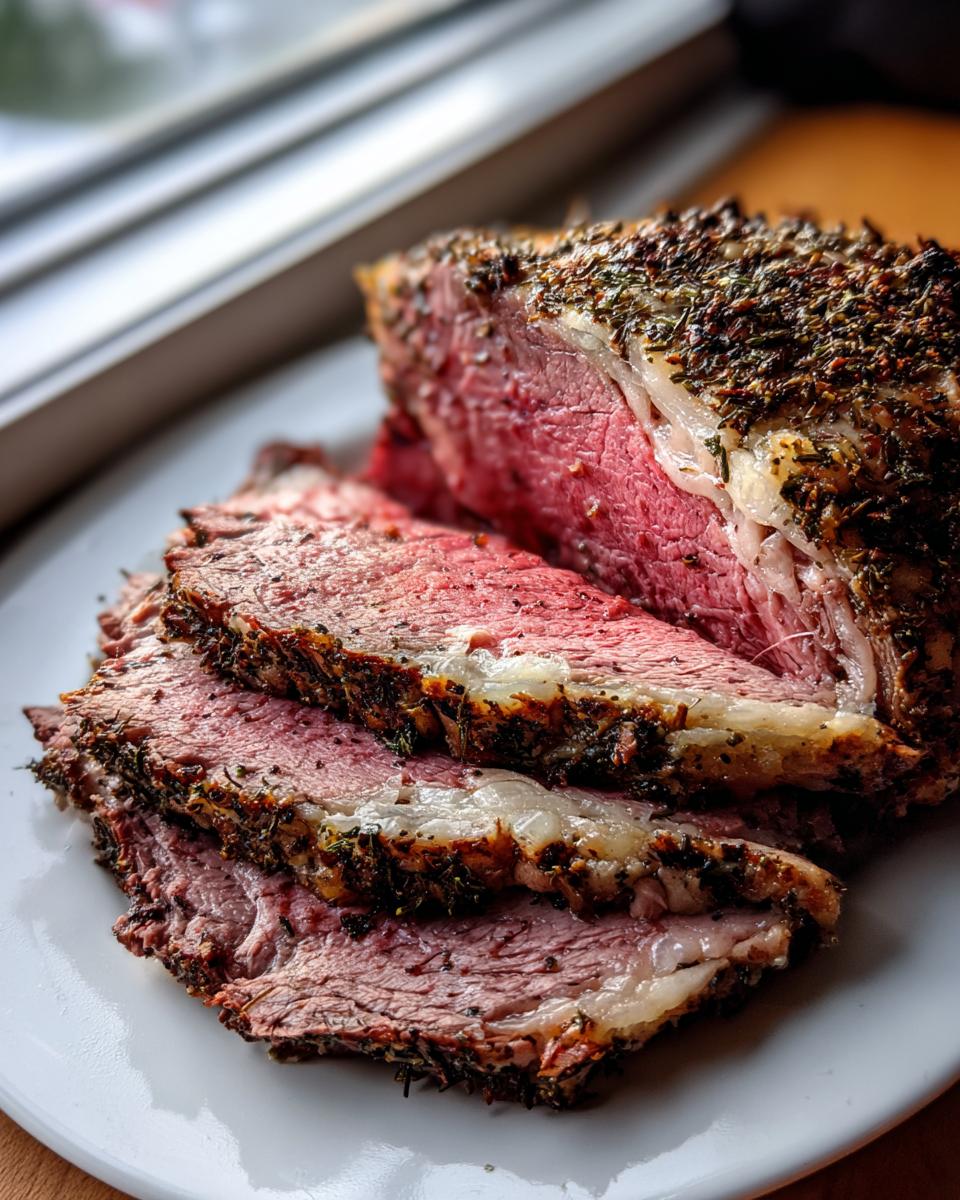
Let’s talk specifics on ingredients because, even in a simple prime rib recipe, the details matter when you’re dealing with a big roast. I always, always recommend sticking with a bone-in cut if you can manage it. Those bones aren’t just for show; they actually act like natural insulation, helping the meat right next to them stay extra tender and cook a bit more evenly than a boneless slab.
When it comes to the salt, don’t even think about using fine table salt here. Coarse kosher salt is the only way to go! It creates those beautiful pockets on the surface that crisp up into the incredible crust we want. If all you have is fine salt, you need to cut the amount down by about half, or you’ll end up with meat that’s way too salty.
Now, about that crust—if you really want that restaurant-style prime rib look we see on those pretty pictures, you have a small extra step you can take before the oven. You can actually sear portions of the roast on the stovetop in a really heavy, oven-safe skillet before transferring it to your roasting pan. A little olive oil in the pan, get it blazing hot, and sear each side for just a minute or two. It adds another layer of browning that makes this tender beef roast recipe look professionally done!
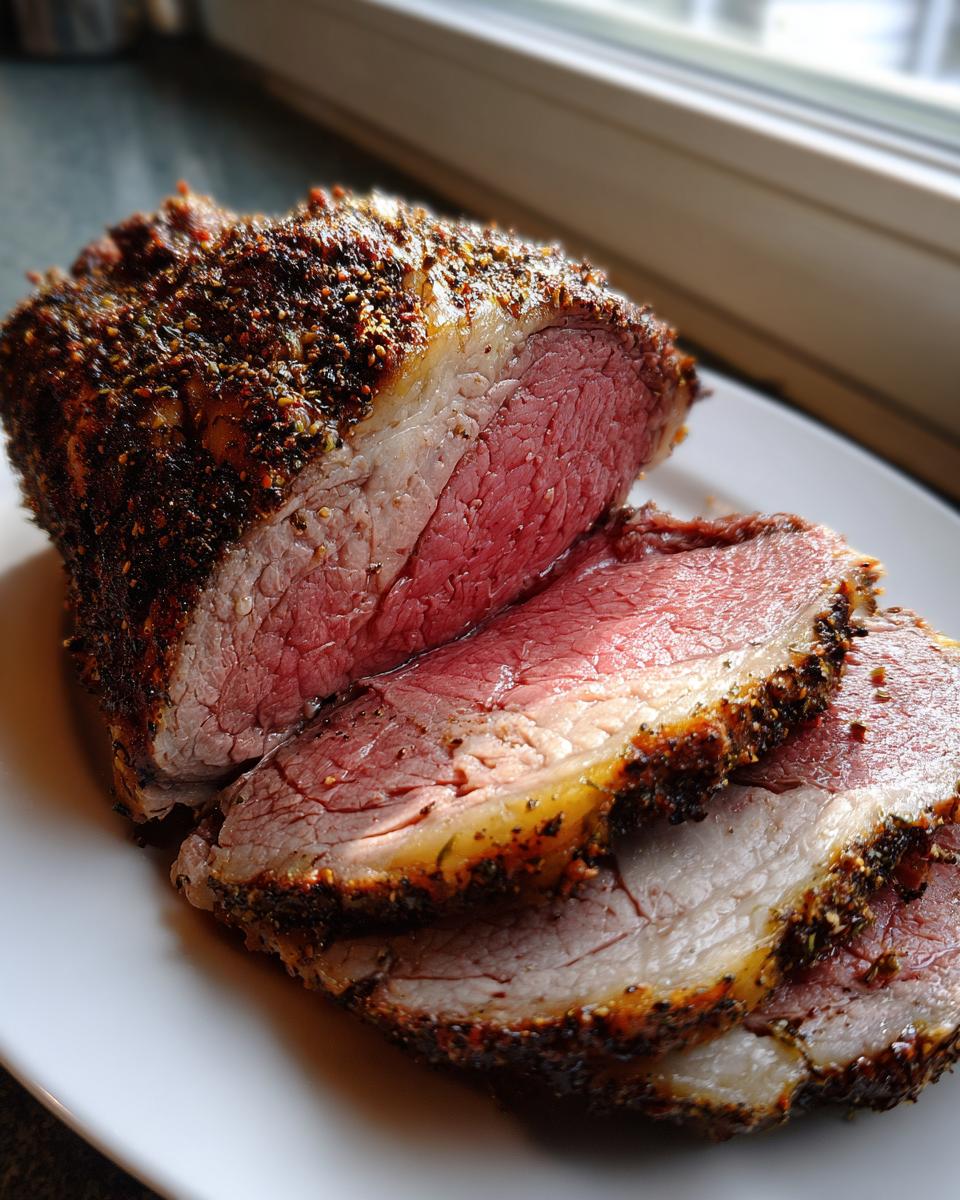
We are aiming for that perfect texture, and these ingredient choices get us nearly there before the oven even hits the meat!
Tips for Success with Your Classic Prime Rib Recipe
Even with the best prime rib recipe, sometimes things feel a little shaky right before the big day. I get it. You’ve invested in this gorgeous cut, and you want perfection! My number one tip, and I can’t stress this enough, is to trust your meat thermometer over your clock. Always. If the recipe says 2.5 hours, but your roast hits temperature early, trust the temperature.
And when I say trust it, I mean pull it out five degrees early! That carryover cooking while it rests is real magic, and it’s what prevents that dry outer ring. This waiting period is essential for achieving that classic prime rib that truly melts in your mouth. Don’t fret about the resting time; use those 30 minutes to whip up my homemade granola recipe later—or just relax with a glass of wine!
Serving Suggestions for Your Prime Rib with Au Jus
Okay, you’ve nailed the cook, you’ve rested the meat, and now you have this incredible, juicy roast that deserves the perfect supporting cast on the plate! While the recipe mentions serving with au jus, I feel like that needs a quick mention on how to make a fast, simple dipping sauce, because I hate waste!
To make a killer quick au jus, you don’t need hours. While that roast is resting, scoop up those amazing drippings left in the bottom of your roasting pan. Pour off most of the fat—you want flavor, not grease! Then, add a little beef broth or water right into the pan and scrape up all those flavorful brown bits stuck to the bottom. Let that simmer on your stovetop for about 10 minutes until it reduces just a tiny bit. That’s real, honest-to-goodness pan jus, and it’s the best accompaniment for your classic shepherds pie, much less this roast!
When we serve this for a big meal, especially during the holidays, I always go for comfort sides. You need things that soak up those juices beautifully. My favorite combination is always a big bowl of fluffy mashed potatoes—remember, they are the perfect sponge for that au jus.
For vegetables, lean into roasting! Roasted root vegetables, like carrots, parsnips, and chunks of sweet potato, just tossed with olive oil, salt, and pepper, roast up beautifully at the same time as the roast cools down. They bring a little sweetness that cuts through the richness of the beef. If you want something green, keep it simple, like blanched green beans tossed quickly with some butter and a sprinkle of salt. You’re planning a holiday centerpiece roast, so you want the sides to be delicious but hands-off once the prime rib comes out of the oven so you can focus on carving!
Storage and Reheating Instructions for Leftover Prime Rib Recipe
Let’s face it, sometimes the hardest part is dealing with the sheer volume of leftovers after you’ve successfully managed to cook that massive roast! But here’s the good news: leftover prime rib is arguably even better the next day, especially if you store it right. You want to make sure those gorgeous slices stay tender and don’t dry out in the fridge, right?
For storage, the key is keeping the air away from those slices. Always refrigerate your leftover prime rib recipe meat within two hours of carving. I like to use a heavy-duty zip-top bag, or wrap the slices tightly in plastic wrap, and then slide that into an airtight container. With this airtight protection, your roast should stay perfectly good for about three to four days in the refrigerator.
How to Reheat Prime Rib Slices Without Drying Them Out
If you just throw a slice of leftover roast in the microwave, you’ve essentially committed a culinary crime! We need gentle heat and moisture here. Forget high heat—we are coaxing the flavor back out, not cooking it again.
The method I absolutely swear by involves the oven and a tiny bit of liquid. Set your oven super low—think 250°F, no higher! Place your slices in a shallow baking dish. Now, here is the game-changer for tender beef roast recipe leftovers: pour just a tiny bit of beef broth or even water into the bottom of the dish, not enough to swim in, just enough to create steam. Cover that dish tightly with foil.
Let it warm through slowly. This keeps the meat from seizing up and releasing all its juice. It takes a little longer than the microwave, maybe 15 to 20 minutes depending on how many slices you have, but the results are totally worth it. You’ll have meat that feels almost freshly carved!
If you’re making something else entirely the next day, like a casserole, you can skip the oven reheating and slice your leftover roast thinly to toss into recipes like my tuna casserole—just add the meat right at the end so it warms through in the sauce. Either way, don’t let those delicious leftovers go to waste!
Frequently Asked Questions About How to Cook Prime Rib
I know when you’re planning a major feast, the questions just pile up! It’s hard enough to coordinate the sides, let alone worry about the star of the show! Dealing with a big, beautiful, expensive cut like prime rib can feel intimidating, but trust me, once you have this simple method down, you’ll feel like a total pro. Here are the things I hear people ask most often about getting that perfect, juicy result. We’ve taken all the guesswork out of how to cook prime rib.
Bone-In vs. Boneless: Which Should I Choose for My Prime Rib Recipe?
This is probably the number one question I get! If you want that wonderfully tender, melt in your mouth prime rib feeling, bone-in wins every time in my book. You can certainly make a boneless roast, and it cooks a little faster, but those bones really help insulate the meat closest to them, giving you a more even cook from edge to center. If you do go boneless, just watch your timing closely, or you might end up with a slightly less juicy prime rib roast. For me, bone-in is the way to go for the best prime rib recipe.
How Do I Get That Restaurant-Style Prime Rib Crust?
Ah, the crispy, herby coating! We talk about the two-temperature method in the instructions, which does 90% of the heavy lifting for that beautiful crust. That initial 15 minutes at 450°F is your magic step for sealing in flavor. But if you want to step it up to a true restaurant style prime rib crust, use that little trick I mentioned earlier: sear the outside in a screaming hot, oiled, oven-safe skillet *before* you ever put it in the oven. That extra surface contact with high heat blasts that exterior seasoning layer with flavor and texture. Just be sure to scrape those crusty bits into your au jus later when you’re done! You can see how other folks tackle their crusts over at The Best Prime Rib Recipe.
Can I Use a Slow Roasted Prime Rib Method Instead of This Recipe?
This recipe uses a high-heat start followed by a medium, consistent temperature roast. It’s fast enough for a busy holiday where you need the oven for other things, but still yields amazing moisture. If you prefer a pure slow roasted prime rib method—setting the oven to a super low 225°F the whole time—that’s absolutely a valid technique! It guarantees tenderness, but honestly, it takes four, five, or even six hours depending on the size. If you are short on oven time for your prime rib for holidays, stick with this two-step process! Either way, always rely on that meat thermometer for that perfect prime rib temperature.
What If I Need to Serve a Crowd? How many pounds do I need?
If you’re planning a massive holiday centerpiece roast—maybe this is your big thanksgiving beef roast centerpiece—you can absolutely scale this up! A good rule of thumb is about 1/2 to 3/4 pound per person if you are going bone-in. So, if you have 12 people coming, aim for at least an 8-pound roast. You’ll just need to increase your cooking time significantly when you drop that temperature down to 325°F. Keep that meat thermometer handy, because time is just a suggestion when you’re cooking something this big! For more easy-to-manage favorites, take a peek at my beef taco casserole, easy family meal recipe.
When you successfully nail that temperature and carve that roast, don’t forget to save some leftovers for amazing sandwiches the next day!
Nutritional Estimate for This Prime Rib Recipe
Okay, I know when you’re making something so incredibly decadent for a special event—like your christmas prime rib—that nutrition becomes maybe the last thing on your mind! But since we’re all about being transparent here at Completely Yummy, I pulled the numbers for you based on our ingredients. Remember, this calculation is just a guidepost, not a doctor’s order, you know?
When you break down this big bite of perfection based on an average serving size, here’s what you might be looking at:
- Serving Size: 6 oz cooked
- Calories: Approximately 450
- Protein: About 40 grams! That’s why it’s so satisfying.
- Fat: Around 30 grams (Remember, a lot of this comes from the marbling in a great rib roast, which is where flavor lives!).
- Saturated Fat: About 12 grams
- Carbohydrates & Sugar: Zero! Our seasoning is all savory goodness.
This is definitely a dish for special occasions where you want something impressive, not an everyday thing! But hey, when you’re serving a holiday centerpiece roast, you deserve all the deliciousness!
Share Your Holiday Centerpiece Roast Success
Well, you did it! You conquered the big roast! I truly hope this prime rib recipe made your table shine, whether it was the star of your Christmas dinner or the magnificent main event for Thanksgiving. Seeing that perfectly crusted, pink center come out of the oven is one of the best feelings in the kitchen, and I’m so happy I got to share my secrets for getting that foolproof result with you.
Now, I want to hear all about it! Did you nail that medium-rare temperature? Did the herbs smell amazing while it was roasting? Head down to the comments section below and let me know how your holiday centerpiece roast turned out. I absolutely adore reading your success stories!
If you’re looking for more inspiration for your next big meal, don’t hesitate to reach out on my contact page. And if you made this and loved it, show it off! Tag me on social media so I can see your gorgeous roast. If you need another showstopper idea, you should definitely check out this delicious inspiration from Tales From My Kitchen over at Ultimate Prime Rib Recipe for Unforgettable Gatherings. Happy cooking, and thank you for trusting Completely Yummy to help you feed the people you love!
PrintThe Ultimate Easy Herb-Crusted Prime Rib Recipe
This oven-roasted prime rib recipe delivers a succulent, juicy roast with a perfectly seasoned crust. It is a simple, foolproof method for creating a show-stopping holiday centerpiece.
- Prep Time: 20 min
- Cook Time: 2.5 hours
- Total Time: 3 hours 20 min
- Yield: 6-8 servings 1x
- Category: Main Course
- Method: Oven Roasting
- Cuisine: American
- Diet: Low Fat
Ingredients
- 1 (5-7 pound) bone-in prime rib roast
- 3 tablespoons coarse kosher salt
- 2 tablespoons black pepper
- 1 tablespoon garlic powder
- 1 tablespoon onion powder
- 1 tablespoon dried rosemary
- 1 tablespoon dried thyme
- 1 tablespoon dried oregano
- 4 tablespoons olive oil
- 4 cloves garlic, minced
Instructions
- Remove the prime rib roast from the refrigerator 3 hours before cooking to allow it to come closer to room temperature. This helps with even cooking.
- Preheat your oven to 450 degrees Fahrenheit.
- In a small bowl, combine the kosher salt, black pepper, garlic powder, onion powder, dried rosemary, dried thyme, and dried oregano to create the herb rub.
- In a separate small bowl, mix the olive oil and minced garlic.
- Pat the entire surface of the prime rib dry with paper towels. This is key for a good crust.
- Brush the entire roast evenly with the olive oil and garlic mixture.
- Generously rub the herb mixture all over the roast, pressing it firmly onto the meat.
- Place the roast, fat-side up, in a roasting pan fitted with a rack.
- Place the roast in the preheated 450 degree oven and cook for 15 minutes. This high heat creates the crust.
- Reduce the oven temperature to 325 degrees Fahrenheit. Do not open the oven door.
- Continue roasting until the internal temperature reaches your desired doneness. Use a meat thermometer inserted into the thickest part of the roast, avoiding the bone. For medium-rare (recommended), aim for 125 to 130 degrees Fahrenheit.
- Remove the roast from the oven when it is 5 degrees below your target temperature, as it will continue to cook while resting.
- Tent the roast loosely with aluminum foil and let it rest on the counter for at least 20 to 30 minutes before carving. This resting period is essential for a juicy prime rib.
- Slice against the grain and serve immediately with au jus, if desired.
Notes
- For a bone-in roast, the bones act as insulation, helping the meat cook more evenly.
- If you prefer a restaurant-style prime rib crust, you can sear the roast on the stovetop in a large, oven-safe skillet before transferring it to the oven.
- Always use a reliable meat thermometer to gauge the perfect prime rib temperature; this prevents overcooking the expensive cut.
Nutrition
- Serving Size: 6 oz cooked
- Calories: 450
- Sugar: 0
- Sodium: 450
- Fat: 30
- Saturated Fat: 12
- Unsaturated Fat: 18
- Trans Fat: 0
- Carbohydrates: 0
- Fiber: 0
- Protein: 40
- Cholesterol: 120